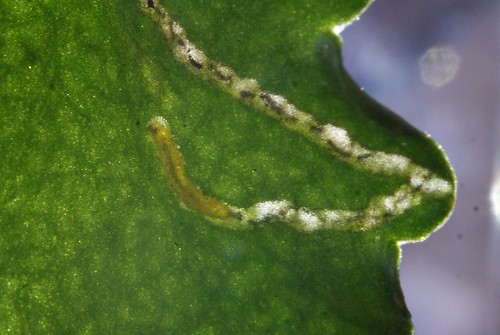
The recent weather also means that the frequency of early stage finds is increasing, with plenty of larvae to be found, their location betrayed by the distorting effects of their spinnings in many cases.
I have tentative IDs for these, any suggestions welcome though, and hopefully will be able to rear them through to adulthood.
The Rosemary bushes in my garden are covered in dozens of easy to spot larval spinnings of Epiphyas postvittana: if this is anything to go by, it looks like this moth will be extremely abundant this year.
Lots of very active larvae of Bucculatrix nigricomella on the Oxeye Daisy plants in the garden this week: both of young, mining larvae and later free-living stages. This species took my 2014 total to over 50, achieved by the last day of February.
Found several larval spinnings of this species today; it's worth having a close look at any Greater Stitchwort as the distortion caused by the larva is quite obvious.
Dave
While ever there are leaves on the trees it is worth the effort having a quick look for leaf mining activity.
The are still plenty of leaves on the Goat Willow around here and as a result a good scattering of tenanted mines of Ectoedemia intimella on pretty much all of the trees I search.
There are still larval cases of some of the Coleophorids to be found, here are a few of my relatively recent finds:
Coleophora albitarsella on Ground Ivy
Coleophora solitariella on Stitchwort
Coleophora limosipennella on Elm
Despite searching for the foodplant of this species for a while now I had no luck until this weekend, when I found one example of Buckthorn in a hedge very close to home (although not in an easily accessible area). Very pleased to add this to the list in what has been a very productive year for leaf miners.
Dave